
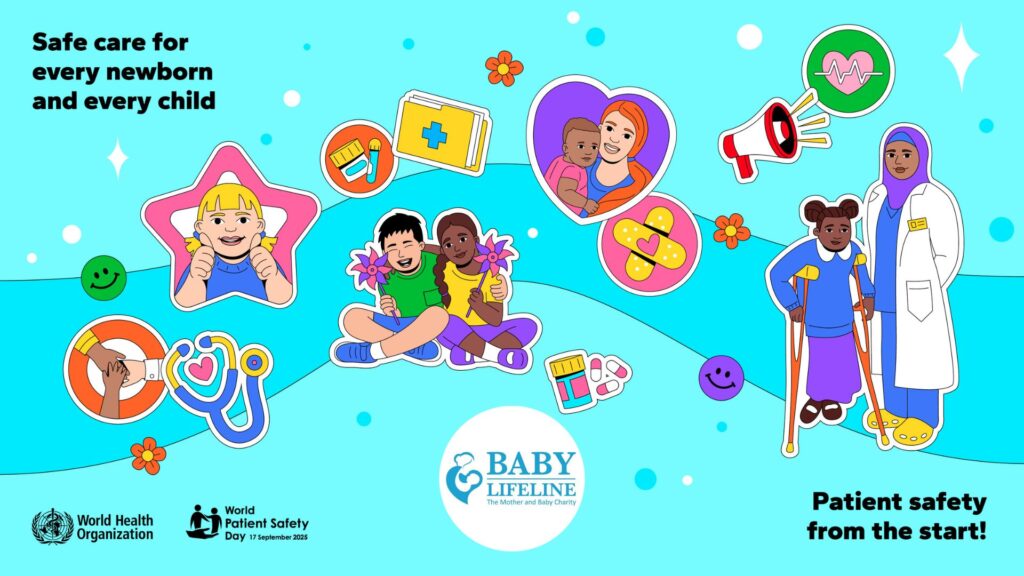
Today, Baby Lifeline is joining thousands of individuals and organisations across the world to mark World Patient Safety Day (WPSD).
This year, the World Health Organization (WHO) is highlighting the vulnerability of newborns and children to patient safety risks, with a focus on those from birth to nine years old. The theme for this year’s World Patient Safety Day is ‘Safe care for every newborn and every child; patient safety from the start!’.
This year’s theme is especially meaningful to us at Baby Lifeline and speaks directly to our mission: to make care safer and better for every pregnant woman and newborn baby. The WHO reminds us that “every child has the right to safe, quality health care from the very beginning,” a statement that Baby Lifeline wholeheartedly agrees with.
The World Health Organization’s core campaign messages are:
- Children are not small adults. They require individualised, safe care
- Safety must come first, always and in every healthcare setting
- The most common causes of harm are known and preventable
- Safer care depends on safe systems and teamwork.
The WHO’s Calls to action and key messages for healthcare professionals, managers and policy makers include:
- Deliver care that’s safe and child-centred
- Make safe care the standard for every child
- Invest in safe care for children. Save lives and resources.
Members of our network including Honorary President Dr Bill Kirkup CBE, Ambassador James Titcombe OBE, Professor Jacqueline Dunkley-Bent OBE, Professor Ranee Thakar and Gill Walton CBE have come together to share their thoughts on the importance of this year’s theme, and how Baby Lifeline’s work contributes to maternity and neonatal safety.
“I am particularly glad that the theme of this year’s World Patient Safety Day has a strong link to maternity and neonatal care.” – Baby Lifeline’s Honorary President, Dr Bill Kirkup CBE
Baby Lifeline has been supporting safe care for more than four decades
“This is a hugely important day […] the start of life is a particularly important time. Baby Lifeline does a huge amount to support safe maternity care and safe neonatal care.”
– Baby Lifeline Ambassador James Titcombe OBE
Baby Lifeline was founded 44 years ago by Judy Ledger, following the heartbreaking loss of three of her babies. Since then, we have worked to support frontline professionals with training in vital areas of maternity and newborn safety, while raising funds to provide essential equipment for safer maternity and neonatal care in the United Kingdom and across the world.
In 2019 we held our first National Maternity Safety Conference. It has since grown into a must-attend annual event, bringing the maternity and neonatal community together not just to discuss challenges, but to share solutions and foster collaboration for change. The theme of this year’s conference is Shaping the Future of Maternity Care Together.
Baby Lifeline works to ensure safety from the start
1. Training the maternity and neonatal workforce
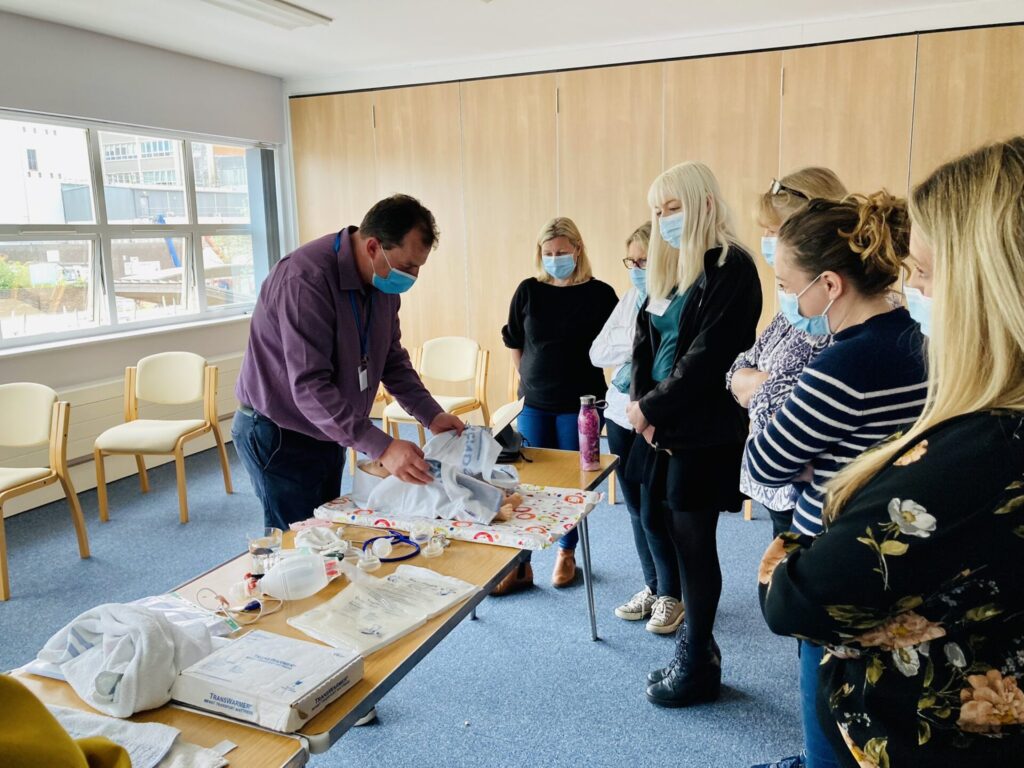
Every year, Baby Lifeline trains thousands of NHS maternity professionals, targeting the known causes of avoidable harm and improving care for pregnant women and their babies. Over the last five years alone, around 15,000 health professionals have attended our courses, helping to translate evidence into safer frontline practice.
Some course, such as Examination of the Newborn, concentrate specifically on the care of newborn babies. Other courses focus on making care safer for mums and babies during pregnancy (such as Implementing Saving Babies’ Lives and Preterm Matters), and ensuring that babies arrive as safely and healthily as possible (CTG Masterclass and Childbirth Emergencies in the Community).
Whether it’s through directly practising newborn life support on a simulation doll, or learning about the Human Factors skills that make systems safer for all staff and service users, all of our courses are designed to improve care for mums, birthing people, their babies and the staff that look after them.
As well as training maternity professionals working in the NHS, we welcome international delegates on our training courses. Previous delegates have joined us from: Australia, Austria, Belgium, Brazil, Burundi, Canada, Chile, China, Estonia, Falkland Islands, France, Germany, Ghana, India, Italy, Japan, Malawi, Netherlands, New Zealand, Nigeria, Oman, Poland, Portugal, Qatar, Singapore, Spain, Sri Lanka, Sweden, Switzerland, Ukraine, United Arab Emirates and the United States of America. Contact us to find out more about training your team!
“We work closely with Baby Lifeline to support wide improvements in maternity and neonatal safety. As a doctor, ensuring our patients receive safe care isn’t simply a priority, it’s a responsibility. It sits at the very heart of everything we do. World Patient Safety Day shines a light on the need to collaborate, to mobilise action and to ensure that every patient receives care that is safe, respectful and effective.”
– Professor Ranee Thakar, President of the Royal College of Obstetricians and Gynaecologists

Spotlight: Examination of the Newborn
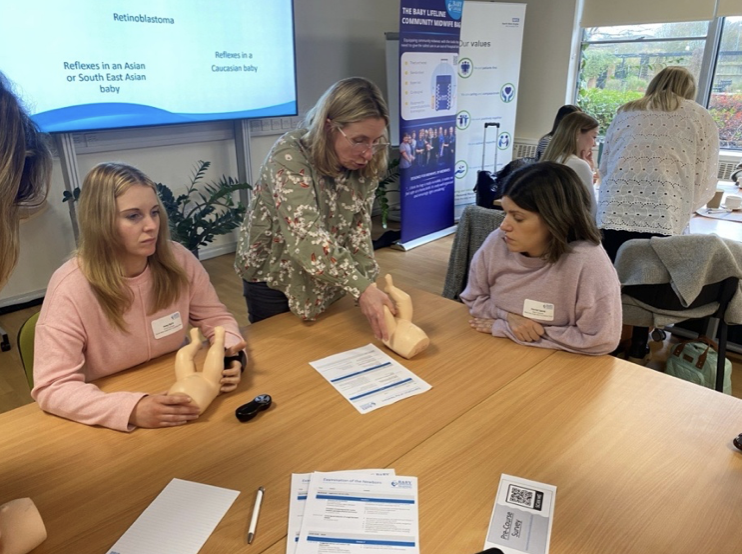
Our Examination of the Newborn course provides clinicians with practical, clinically led training aligned to NIPE screening priorities, including congenital cataract (eyes), hip dysplasia, congenital heart disease and undescended testes. It also covers recognition of common neonatal problems and early escalation. Recent cohorts reported 96% rating the education ‘very good’ or ‘excellent,’ and 95% of attendees intending to change practice as a result.
This represents real world improvement where it matters most.
“An excellent study day. All speakers were extremely knowledgeable and engaging & made the sessions interactive and thought provoking. The heart examination session was the best I have ever been taught. Thanks to all facilitators.”
“This was a brilliant day. Having Specialists Doctors within the areas was excellent. They were also practical in their approach and challenges that can be faced on a day to day basis.”
“This was a great day. Very engaging and knowledgeable facilitators. One of the best CPD modules I have done.”
– Recent delegate feedback from our Examination of the Newborn training course .
2. Equipping safe care in the community
In response to our research which found that one in three midwives reported issues with the home birth bags that they were using in the community, we designed a specialist out-of-hospital birth bag that includes all of the equipment needed for home births, including emergency situations.
Our nationally-recognised Community Midwife Bags were co-designed with clinicians to standardise and stock the essentials for planned home births and emergencies, making equipment easy to locate and use when seconds count. Each bag contains neonatal resuscitation equipment, enabling midwives to provide rapid, lifesaving care for babies in urgent situations. To date, more than 1,250 bags are in use across the United Kingdom and Channel Islands, helping teams deliver consistent, safe care in community settings.
95% of midwives surveyed told us that their bag had an impact on the care they are able to provide at home births.
Nine in ten told us that the bags improved safety at home births they attend.


Safe care for newborns worldwide
Since launching our Ukraine appeal in March 2022, Baby Lifeline has sent over £5.37 million worth of maternity safety equipment including fetal monitors, baby warmers and incubators into some of the hardest hit areas of Ukraine. Alongside this, at least 177 of our out-of-hospital birth bags have been delivered to local professionals, supporting safe births and safer care of newborn babies in extraordinarily challenging conditions.
Our bags are also in use in Malawi, Uganda, Turkey, New Zealand.
“Whilst every day is a patient safety day, the focus of World Patient Safety Day on the 17th September every year emphasises that patient safety is a global priority.”
– Baby Lifeline Patron and Chief Midwife for the International Confederation of Midwives, Professor Jacqueline Dunkley-Bent OBE


3. Conducting vital research to support staff and families
As a leading voice in maternity safety, we work with top universities and national panels to transform maternity care, represent family experiences, and prevent harm through research.
Our own unique research projects focus on identifying and overcoming the barriers to safer maternity care by investigating gaps in training for maternity professionals, and lobbying for investment and funding for maternity services.
“Every woman and family should leave maternity care whole, happy and healthy, having received the safest and best possible care. Sadly we know that that isn’t always the case, and that’s why we work with Baby Lifeline and other organisations to campaign for better investment in maternity.”
– Gill Walton CBE, CEO of the Royal College of Midwives
Why this matters today
This year’s World Patient Safety Day focuses global attention on building safer systems, supporting staff, and engaging families in the care of newborns and children. That is exactly where Baby Lifeline’s training and equipment programmes deliver impact.
From skill-building in clinician teams and hospital wards, to standardising kit for safer community births, to supporting care for women and newborn babies in conflict zones, we are committed to supporting safe care from the start for every baby.
How you can help
• Health professionals: Book or commission Baby Lifeline training. Join courses such as Examination of the Newborn and turn knowledge into safer practice
• Supporters and partners: Support our Ukraine Appeal to keep essential maternity equipment flowing where it is most needed
• Everyone: Help mark World Patient Safety Day by sharing key messages from the campaign.
Throughout the day, Baby Lifeline will also share insights from our patrons, ambassadors and subject matter experts. Please look out for posts on our social media accounts.
We will also be lighting the Baby Lifeline office in orange to shine a light on the importance of safe care for every newborn and every child.
Together for safer beginnings
Let us work together to ensure every newborn and child, no matter where they are born, receives the safest care possible from the very start.