

Community Midwife Bags
Every mum and baby deserve the safest birth experience possible, no matter the place of birth. This means ensuring that all professionals, working in all environments, have the equipment and training to feel confident, competent, and valued. Nowhere is this truer than in the community sector.

The Community Midwife Bag
We listened to the pleas of community midwives, and we put together a nationally-recognised home birth bag with everything they need to give the safest and best care at home births.
- Provides everything needed for births at home, including any emergencies (expert-led consensus of “essentials”).
- Everything is easily and quickly accessible.
- Designed for infection-control.
- In a backpack or on wheels to make it easier to transport for midwives.

Why are these home birth bags needed?
1 in 3 midwives reported issues with their home birth bags and its contents:
- 30% reported that the bag/container used was not safe for use.
- 40% reported that their bag/container did not adequately meet their needs.
- 27% did not feel that they carried everything they might need to facilitate a homebirth in the community (including dealing with an emergency).
- 35% sourced and purchased the bag/container themselves using personal funds.
Research by Baby Lifeline, supported by the Royal College of Midwives.
Who was involved in creating the bag?
The expert group worked hard to develop gold standard for equipment and how it should be carried. They were also guided by community midwives and what they told us they wanted.
The expert working group consisted of:
- Midwives
- Paramedics
- Obstetricians
- Pharmacists & Neonatologists
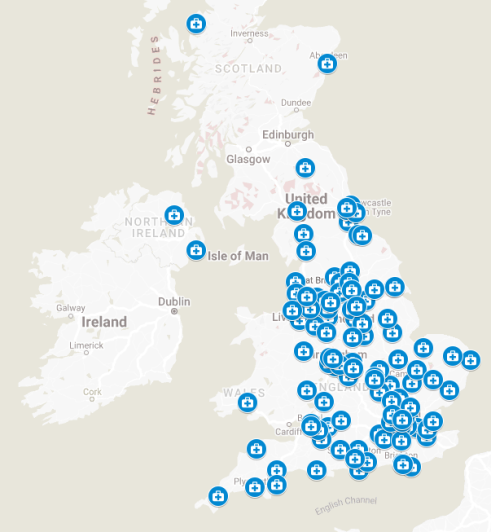
Where might you see a Baby Lifeline Community Midwife bag?
To date, Baby Lifeline has supplied over 1,727 bags to healthcare providers across the UK and Channel Islands. The bags can be found in 131 different organisations spanning all regions of the country.
Click here to see the full list of where you might expect to see one.
The bags have been provided through a combination of charitable funds, direct purchases from organisations, and funding from NHS England.
In addition to the sites in the UK, Baby Lifeline is also raising funds to provide bags for healthcare organisations in Ukraine. So far, 184 bags have arrived in the country with more due to be sent in the near future.
Further details, including how to donate to the Ukraine Appeal can be found here.
Home Births
Around 1 in 50 women in England and Wales will give birth at home [1].
Births in community settings, and community services in general, are gaining more attention as a better option for some low-risk mothers [2] [3], and to support a national initiative to improve care called “continuity of carer” [4].
Births in the UK are generally safe for first time mothers and for mothers giving birth again. For women having a second or subsequent baby, home births and midwifery unit births appear to be safe for the baby and offer benefits to the mother [3]. However:
For mothers having their first baby, a planned home birth increases the risk for the baby when compared to obstetric units [3].
In addition, research shows that nearly half of first-time mothers and 1 in 10 women having subsequent babies were transferred to an obstetric unit from a planned home birth [3].
This shows that, despite home births being a safe option for mums, community midwives need the right equipment in case a woman or her baby need extra support at home.
Global Reach
Baby Lifeline’s Community Midwife Bags have been vitally important for countries where resource is low or which are geographically dispersed.
The bags have now been shipped to war-torn Ukraine, rural areas of Malawi following Cyclone Freddy, Turkey, Ugandan hospitals, and even New Zealand.

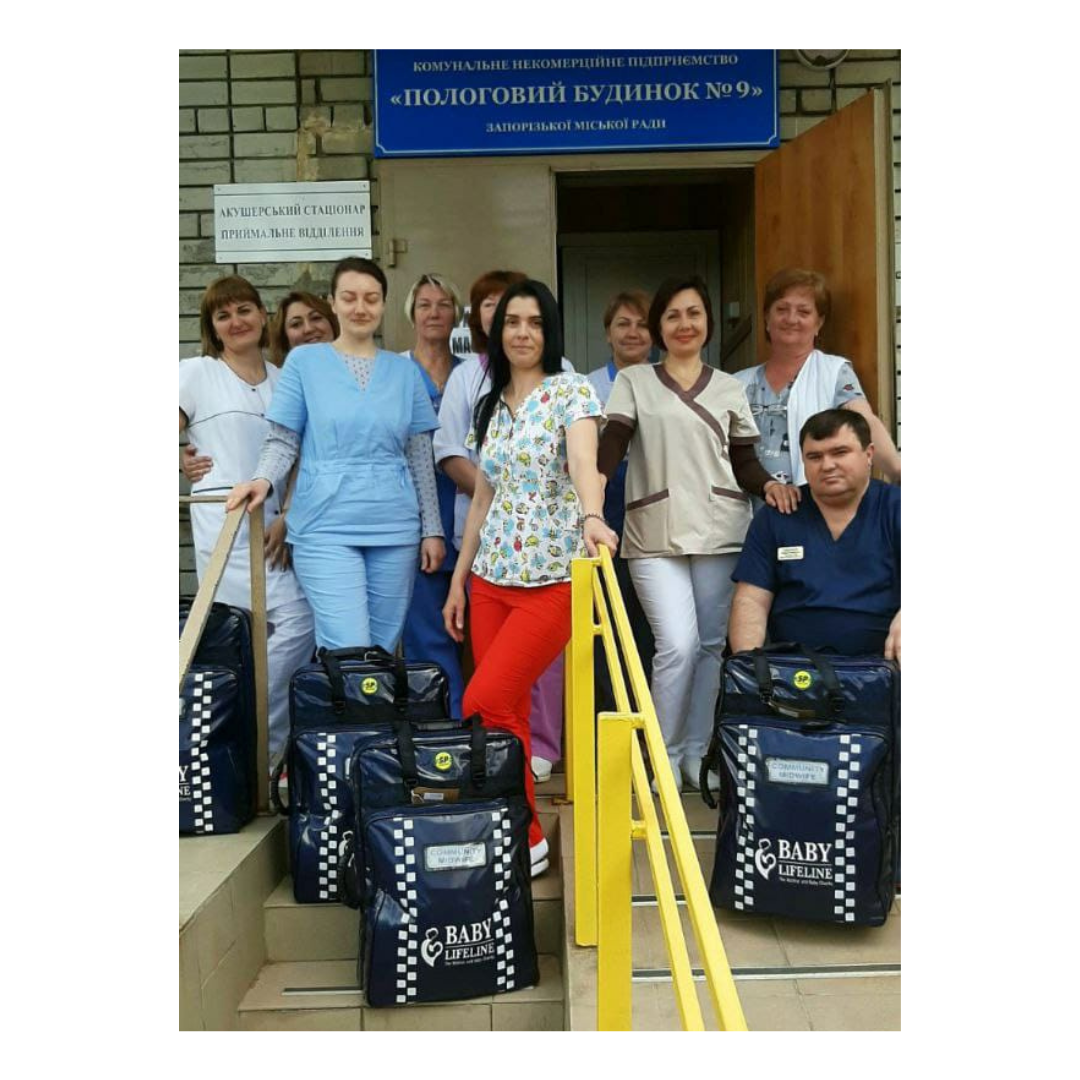

Our Community Midwife bags are helping to save lives across Ukraine
184 Baby Lifeline Community Midwife bags have so far been delivered to health professionals caring for mothers and babies in some of the most dangerous areas of Ukraine.
Baby Lifeline and its supporters have donated more than £5,626,830 in maternity safety equipment to Ukraine since the war began.
Supporting hospitals in Malawi
Four Baby Lifeline Community Midwife bags and trollies have been delivered to Malawian district hospitals. Following Tropical Cyclone Freddy many rural health centres have been destroyed and some washed away.
Baby Lifeline Community Midwife Bags will be used to help support healthcare professionals and disaster centres to conduct safe community births for pregnant mothers and newborn babies in the rural communities.
Bags in Uganda
A midwife from Milton Keynes University Hospital very generously donated some Baby Lifeline kits bags for use by the MAMA (Midwives at Maternity Azur) clinics in Uganda. This was after volunteering in Uganda.
Would you like to order a bag?
Please share some details and we’ll get back to you.
Sources
1. NHS. (6th March 2018) Where to give birth: the options. Retrieved 10th April 2019, from https://www.nhs.uk/conditions/pregnancy-and-baby/where-can-i-give-birth/
2. National Institute for Health and Care Excellence (2014). Choosing place of birth: resource for midwives (CG190). Retrieved from https://www.nice.org.uk/guidance/cg190/resources/choosing-place-of-birth-resource-for-midwives-msword-248730877
3. Birthplace in England Collaborative Group: Brocklehurst P, Hardy P, Hollowell J, Linsell L, Macfarlane A, McCourt C, et al. Perinatal and maternal outcomes by planned place of birth for healthy women with low risk pregnancies: the Birthplace in England national prospective cohort study. BMJ 2011;343:d7400.
4. NHS England (2016) National Maternity Review: Better Births Improving outcomes of maternity services in England A Five Year Forward View for maternity care London: NHS England.